
What Happens When AI Can Build Full Apps Without Developers?
There’s a strange shift happening in software right now.
A founder with no engineering background can open an AI tool, describe an idea in plain English, and watch a working product appear on the screen. Not a prototype. An actual app.
A few years ago, that sounded like startup fantasy. Now platforms like Replit, Bubble, GitHub Copilot, and OpenAI-powered coding systems are pushing software creation into a completely different phase.
The interesting part isn’t the technology itself. It’s what happens to businesses, developers, startups, and digital culture when software becomes dramatically easier to create.
Because once app development becomes conversational, the economics of the internet start changing too.
AI App Development Without Developers Is Already Starting
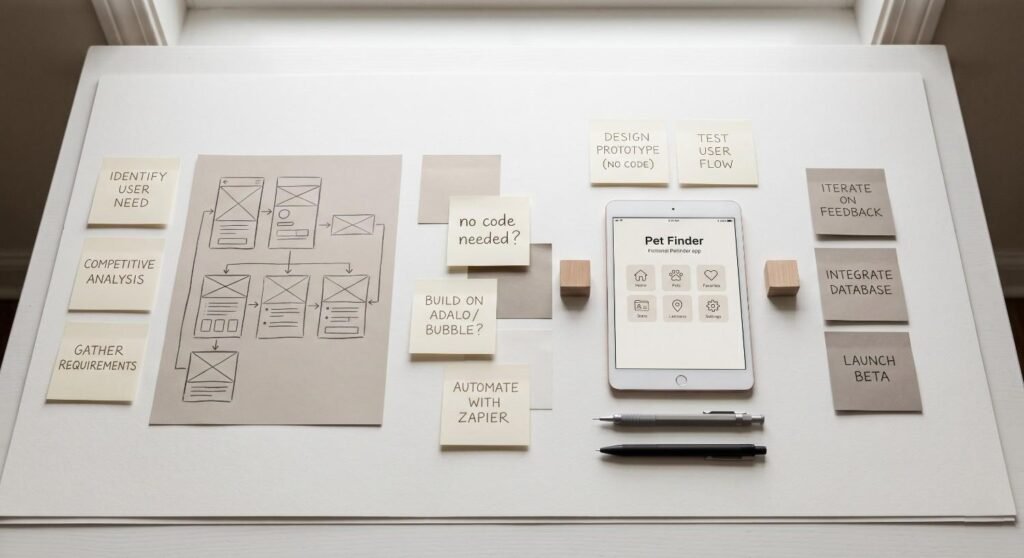
People still imagine AI coding tools as assistants that autocomplete code. That’s outdated now.
Modern AI systems can:
generate frontend interfaces
connect APIs
build databases
create workflows
debug applications
deploy basic products
Some tools are even experimenting with autonomous AI agents that can plan software architecture with minimal human involvement.
That changes who gets to build.
A small creator with an idea can suddenly compete with companies that previously needed full engineering teams. The barrier between “idea” and “product” gets thinner.
And honestly, that’s both exciting and slightly chaotic.
The Real Shift Isn’t Technical. It’s Economic.
When app development becomes cheaper, software stops being scarce.
That matters more than people realize.
For years, building software required:
developers
project managers
infrastructure specialists
expensive timelines
AI compresses that entire process.
A startup that once needed six months and $100,000 to validate an idea may soon do it in two weeks with AI-assisted workflows.
That creates a new kind of internet economy:
more micro-SaaS products
faster startup experimentation
shorter product lifecycles
smaller digital teams
increased competition
The internet may become flooded with software the same way social media became flooded with content after smartphones made publishing effortless.
Quantity rises first. Quality becomes the differentiator later.
Will Developers Actually Be Replaced?
Not exactly. But the role is definitely changing.
Businesses rarely pay developers only to write syntax. They pay them to solve messy problems:
scalability
security
architecture
integrations
compliance
infrastructure decisions
AI can generate code quickly. Understanding business complexity is harder.
What’s more likely is this:
junior coding tasks shrink while strategic engineering becomes more valuable.
Developers may spend less time manually building interfaces and more time supervising AI systems, validating outputs, and designing larger ecosystems.
In some ways, developers could evolve into software orchestrators instead of traditional coders.
That’s already visible inside companies using GitHub Copilot and internal AI development workflows.
The Rise of “Idea-First” Startups

One of the biggest changes may happen in entrepreneurship.
Historically, many non-technical founders struggled because they depended heavily on engineering talent. AI reduces that dependency.
Now a marketer, creator, consultant, or operator can potentially:
validate ideas faster
launch MVPs independently
automate operations
iterate products rapidly
This could create a wave of niche businesses that would never have existed under traditional software economics.
The interesting part is cultural.
We may move from:
“Who can build software?”
to:
“Who understands problems deeply enough to build useful software?”
That’s a completely different competitive advantage.
AI-Generated Apps Still Have Serious Problems
There’s also a lot of hype hiding practical reality.
AI-generated software still struggles with:
security vulnerabilities
scalability issues
technical debt
inconsistent architecture
unreliable debugging
compliance risks
A generated app can look polished while hiding fragile infrastructure underneath.
That’s dangerous for businesses that assume AI-created products are production-ready simply because they function initially.
We’re entering a phase where software may become easier to create but harder to trust.
And trust matters enormously in SaaS ecosystems.
Especially for:
fintech platforms
healthcare systems
enterprise software
CRM workflows
ERP infrastructure
The future probably isn’t “AI replaces developers.”
It’s more likely:
“AI massively increases software production while humans remain responsible for reliability.”
Why This Matters Beyond Tech
This shift affects more than Silicon Valley.
When software creation becomes easier:
local businesses can build custom tools
creators can launch digital products
agencies can automate operations
startups can test ideas cheaply
small teams can compete globally
That redistributes digital leverage.
Some companies will move faster than ever. Others will drown in low-quality AI-generated products because they mistake speed for strategy.
The businesses that win probably won’t be the ones using the most AI.
They’ll be the ones using AI with the clearest understanding of users, systems, and long-term product value.
That distinction is going to matter a lot over the next few years.
Conclusion
AI-generated software isn’t just another productivity trend.
It changes who gets to participate in the digital economy.
That’s the bigger story underneath all the headlines about AI coding tools.
Software is slowly becoming more conversational, more accessible, and more automated. But accessibility creates noise too. The internet may soon have an overwhelming amount of functional software competing for attention.
Which means human judgment becomes more valuable, not less.
The future probably belongs to businesses that combine AI speed with genuine strategic thinking.
Because building apps faster is easy.
Building something people actually trust and continue using is still the difficult part.
At Unity Sangam, we explore the intersection of AI, digital strategy, SaaS ecosystems, and future technology trends shaping modern businesses.
If your business is preparing for AI-powered transformation, workflow automation, or scalable digital product systems, now is the time to rethink how software gets built and who gets to build it.